China Best Skincare Packaging Design Tips for Global Buyers

Time:2026-11-23 Author:Amelia
0%

Skincare packaging does more than protect a formula. It shapes expectations before a customer opens the jar. For global buyers, design must balance shelf appeal, ease of use, production quality, and shipping needs. A beautiful mockup is not proof of a dependable package.

The practical question is how to design attractive skincare packaging without losing sight of the product inside. Consider the formula’s texture, use pattern, and dispensing needs. A thick cream may suit a wide-mouth jar, while a lightweight serum may benefit from a controlled pump or dropper. Test each option with the actual formula. Small details matter. A cap that loosens in transit can undermine a polished label.

Color, typography, and surface finishes should make product information easy to scan. Ask suppliers for physical samples, confirm decoration options, and test the package before approving production. Photos can hide a rough seam or an awkward pump. They often do. Compare minimum order quantities, lead times, quality checks, and shipping protection. Requirements and consumer preferences vary by destination, so verify current market-specific packaging and labeling expectations with qualified local professionals.

There is no single design that works everywhere. A restrained bottle may feel premium in one market and plain in another. That is worth questioning. Strong packaging comes from testing, clear supplier communication, and careful revisions—not from chasing every trend. The result should look appealing, work reliably, and remain practical when thousands of units leave the factory.
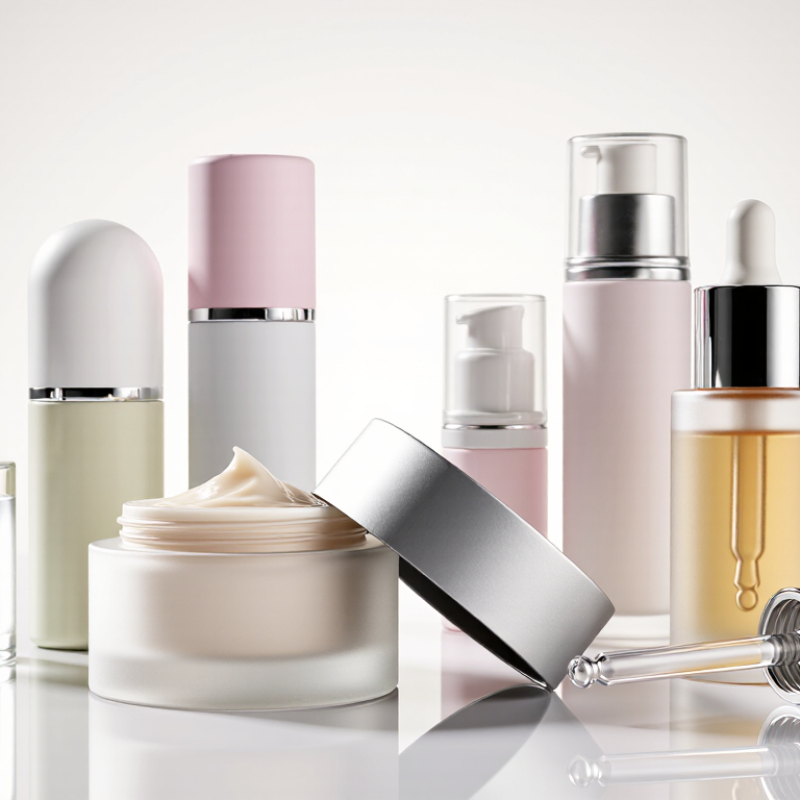
China Best Skincare Packaging Design Tips for Global Buyers

Understanding China's Skincare Packaging Market and Design Options

China’s skincare packaging market serves a large, varied beauty sector. The National Bureau of Statistics of China recorded 414.2 billion yuan in cosmetics retail sales in 2023. That figure signals demand, but it does not reveal which package formats shoppers prefer. Buyers should compare local consumer testing, filling-line capability, and transport conditions before selecting a design. Fit comes first. For serums, airless pumps can limit repeated exposure to air; jars offer easy access but need clean-use instructions. Tubes and lightweight plastic bottles can reduce shipping weight, while glass can feel substantial on a shelf. The best choice depends on formula viscosity, dosage, and handling.

Material decisions matter too. The OECD’s Global Plastics Outlook (2022) reports that packaging generated about 40% of global plastic waste in 2019. This broad figure is not skincare-specific, but it makes recyclability and material reduction relevant design checks. Buyers can compare mono-material packs, verified recycled content, refill systems, and removable labels. Ask suppliers for material specifications and compatibility-test results, not only attractive renderings. China’s supplier base offers many finishes and mould options, yet extra coatings or mixed materials may complicate sorting. A glossy sample can impress. Not always. Request pilot samples, then test leakage, pump output, label adhesion, and carton protection under realistic shipping conditions. Refill packs add steps for users, and not every market handles them consistently.

Choosing Packaging Materials and Formats for Skincare Products

Start with the formula Packaging decisions should start with the formula, not the shelf photo. A watery toner may suit a lightweight PET bottle, while an airless pump can help limit repeated exposure for some creams. Test the formula with the actual container, closure, and liner. Small changes in viscosity can affect dispensing more than expected. It happens.

Glass feels substantial and can suit products needing a stronger barrier, but it adds weight and breakage risk during shipping. PET and PP are lighter options for bottles, jars, and pump components. Compatibility still depends on the formula. For oily serums, check for swelling, odor transfer, discoloration, and leakage after temperature cycling. A jar is simple to fill and use, but fingers repeatedly enter it. An airless format can reduce contact, though it may cost more and leave some product behind.

Ask suppliers for material specifications and samples, then run compatibility and drop tests using the intended formula. Try the pump with wet hands; a stiff actuator can frustrate customers. Check how the package fits cartons and shipping cases, too. A small pilot order can reveal filling or transit problems before a larger commitment. Not every test gives a clean answer, so record what changed and retest when needed.

Adapting Visual Design to Global Markets and Brand Identity

For global skincare packaging, visual consistency should not mean identical execution everywhere. Keep the brand’s core cues—such as a restrained palette, clear logo placement, and recognizable type—while adjusting language, imagery, and information hierarchy for local shoppers. A carton viewed under bright pharmacy lighting needs readable product details; a small online thumbnail needs a strong, simple silhouette. Test both. A design can look elegant on screen and still feel crowded in hand.

Sustainability cues also need care. PwC’s 2024 Voice of the Consumer Survey found that 46% of respondents said they were buying more sustainable products, while surveyed consumers were willing to pay an average 9.7% more for sustainably produced or sourced goods. These are broad consumer findings, not skincare-specific results. They suggest an opportunity, not a guarantee. Use honest material descriptions and avoid visual claims that packaging cannot support. A muted green color alone proves nothing.

Before production, compare mock-ups with local buyers and packaging specialists. Check contrast, type size, translation length, and how the container opens. Regional preferences vary, even within one country. Some assumptions will be wrong. That is useful feedback, not failure. Record what people notice first, then refine the design without losing the brand’s recognizable character.

Checking Safety, Sustainability, and Regulatory Requirements

Safe skincare packaging starts with the formula, not the mood board. A jar, pump, or tube must protect the product through filling, shipping, and daily use. Test compatibility, closure integrity, and dose consistency under heat and light. Keep records of material specifications and test results. A premium finish proves little about product safety.

Rules differ by market. In the European Union, Regulation (EC) No 1223/2009 requires a cosmetic product safety report before market placement, alongside product information documentation. In the United States, MoCRA includes facility registration, product listing, and serious adverse-event reporting requirements, with some exemptions. Buyers should request current documentation, identify who holds each record, and confirm packaging claims match the actual material. Details matter.

Sustainability needs the same scrutiny. OECD’s Global Plastics Outlook (2022) reports that only 9% of plastic waste was recycled globally in 2019. UNEP’s Turning off the Tap (2023) estimates coordinated changes could reduce plastic pollution by 80% by 2040. Ask for recycled-content evidence, recyclability guidance, and refill durability data; assess the full pack, including pumps and labels. Less material is not always better if leakage or spoilage rises. That trade-off deserves another look.

China Best Skincare Packaging Design Tips for Global Buyers - Checking Safety, Sustainability, and Regulatory Requirements

Design Dimension What Global Buyers Should Check Useful Evidence or Test Regulatory and Market Notes
Product compatibility Confirm the container, closure, liner, pump, and any decoration are compatible with the actual formula. Check for leakage, discoloration, odor change, corrosion, swelling, cracking, or loss of product performance. Formula-in-pack compatibility and stability testing under appropriate storage conditions; documented checks on production samples. There is no single universal packaging test for every skincare product. Test conditions should reflect the formula, pack materials, shelf life, and intended markets.
Material safety and traceability Request material specifications for components that contact the product, including coatings, inks, adhesives, seals, and recycled content. Establish batch traceability and change-control procedures. Material declarations, supplier specifications, applicable substance-compliance statements, and traceable component or batch records. Chemical and packaging rules vary by destination and material. Assess applicable restrictions, such as relevant REACH requirements for EU-market products, rather than relying on a generic “compliant” statement.
Pack protection and dispensing Choose a format that protects the product from contamination, light, air, moisture, and accidental opening where relevant. Check dosing consistency, pump function, closure security, and consumer usability. Leak, drop, transit, dispensing, and closure tests appropriate to the package and distribution route; user trials where accessibility or ease of use is important. Do not assume that an airless or sealed design is automatically required. Select protection based on product risk assessment and support any product claims with evidence.
Label information Allow adequate space for the destination-market language, legible text, ingredient information, directions, warnings, net contents, and required traceability details. Market-by-market label review, artwork proofing, and checks that required information remains readable after printing and handling. For EU cosmetics, Regulation (EC) No 1223/2009 includes labeling requirements such as nominal content, precautions where applicable, batch identification, ingredients, and responsible-person details. Additional particulars apply depending on the product.
Recyclability and material reduction Reduce unnecessary components and evaluate whether the full pack can be sorted and recycled in the intended markets. Consider removable labels, separable parts, refill formats, and material choices together. Component-by-component material breakdown, weight data, packaging specifications, and market-specific recyclability assessment. Recycling access and acceptance differ by location. Avoid unqualified “recyclable” claims unless the claim is accurate and substantiated for the market where the product is sold.
Recycled and bio-based content Check the source, percentage, consistency, appearance, odor, and performance of recycled or bio-based materials. Confirm suitability for the intended product and packaging component. Supplier chain-of-custody or content documentation, material specifications, and compatibility testing using the proposed production material. Content and environmental claims should be specific and verifiable. Recycled content does not by itself establish that the finished pack is recyclable or suitable for every formula.
Packaging waste obligations Identify who is responsible for packaging data, producer registration, reporting, and fees in each sales market. Confirm how packaging weights and material categories will be recorded. Bill of materials with component weights, material codes, and a documented process for updating data when packaging changes. Extended producer responsibility rules vary by country and sometimes by region. The EU Packaging and Packaging Waste Regulation (EU) 2025/40 generally applies from 12 August 2026, with specific provisions and timelines that should be checked for the relevant product.
Supplier quality and production control Agree on approved samples, specifications, inspection criteria, defect handling, and notification before changes to materials, tooling, suppliers, or production processes. Signed specifications, pre-production samples, inspection records, change-control records, and corrective-action documentation. Packaging quality controls support consistent supply but do not replace the cosmetic product’s own safety assessment, market authorization steps, or labeling review.

Evaluating Chinese Packaging Suppliers and Production Quality

China Best Skincare Packaging Design Tips for Global Buyers

Evaluating Chinese Packaging Suppliers and Production Quality

A polished sample is only a starting point. Ask suppliers how they control color, dimensions, sealing, and decoration across full production runs. Request recent inspection records and clear acceptance criteria, not just a verbal promise. For example, agree on acceptable color variation and check whether pump output stays consistent across repeated presses. Small details matter.

Order a pre-production sample made with the intended materials and finish. Test it with your actual formula, since oils or active ingredients may affect some plastics, seals, or printed surfaces. Check for leaks after transport simulation, and inspect labels for smudging or lifting. Ask who handles in-process checks, how defects are recorded, and what happens when a batch falls outside agreed limits. If possible, arrange an independent inspection before shipment. It adds cost, but can reveal issues that photos miss.

A factory visit can clarify workflow, though one visit cannot prove every batch will be consistent. Review equipment maintenance, staff training, and how materials are traced from arrival to finished goods. Be cautious if documentation is incomplete or answers change between meetings. I have seen specifications that looked precise on paper but left room for interpretation. Put tolerances, approved samples, and corrective steps in writing before production begins.

FAQS

Should skincare packaging look identical in every market?

Keep recognizable colors, logo placement, and typography, but adapt language and imagery. Local shoppers may notice different details.

How can packaging stay readable in stores and online?

Check small text under bright pharmacy lights, then view the pack as a tiny online thumbnail. Test both.

What should designers learn from local packaging tests?

Ask buyers what they notice first. Record confusion about labels, opening, or translated text. Some assumptions will be wrong.

Do green colors prove that packaging is sustainable?

No. Describe materials accurately and support environmental claims with evidence. A muted green color alone proves nothing.

What should packaging protect against during everyday use?

Test the container with the actual formula under heat and light. Check leaks, closure strength, and consistent dispensing.

What packaging records should buyers request?

Request material specifications, test results, and current market-specific product documents. Confirm who keeps each record. Details matter.

Does recycled packaging always mean a better environmental choice?

Not automatically. Check recycled-content evidence, recyclability guidance, and refill durability, including pumps and labels.

How should teams balance lighter packaging with product protection?

Less material may increase leaks or spoilage. Compare the full pack in shipping and daily use; the trade-off deserves another look.

Conclusion

China offers global buyers a wide range of skincare packaging options, from lightweight bottles and jars to tubes, pumps, and cartons. Choosing the right format and material depends on the product’s texture, intended use, shipping needs, and desired customer experience. A clear understanding of available production capabilities can help buyers balance appearance, practicality, and cost.

To learn how to design attractive skincare packaging, align colors, typography, and structural details with the product’s identity while considering the preferences of target markets. Evaluate material safety, sustainability goals, and applicable requirements for each destination before production. When comparing suppliers, review samples, production consistency, quality-control processes, communication, and delivery timelines. Careful planning across design, materials, compliance, and manufacturing can help create packaging that looks appealing and performs reliably in international markets.

Amelia

Amelia

Amelia is a seasoned marketing professional with a wealth of expertise in our company’s core offerings. With an unwavering passion for driving growth and innovation, she plays a pivotal role in shaping our marketing strategies and enhancing brand visibility. A key aspect of her responsibilities......