Choosing skincare packaging is not just a design decision. It can affect product stability, dispensing, hygiene, and the experience of using a formula every day. A lightweight lotion may work well in a pump bottle, while a rich balm may be easier to scoop from a jar. But the formula matters more than habit. Ingredients, texture, and sensitivity to light or air can change which format makes sense.
So, what is the best packaging for skincare products? There is no single answer. A glass bottle can feel substantial on a bathroom shelf, yet it may be heavy and break if dropped. An airless pump can limit exposure during use, but it may not dispense every last drop. These trade-offs deserve attention. Before choosing, brands should test packaging samples with the actual formula, check that closures work reliably, and observe how the product dispenses over time. A pack that looks ideal when empty can behave differently when filled.
This article explores how to compare bottles, jars, tubes, and pumps by product type, protection needs, user convenience, cost, and material choices. It also considers sustainability claims carefully, since recyclability can depend on local collection systems and packaging design. Small details matter: a slippery cap, a pump that clogs, or a label that peels near a wet sink can frustrate customers. There may still be compromises. The aim is to choose packaging that protects the product and feels practical—not merely impressive in a product photograph.
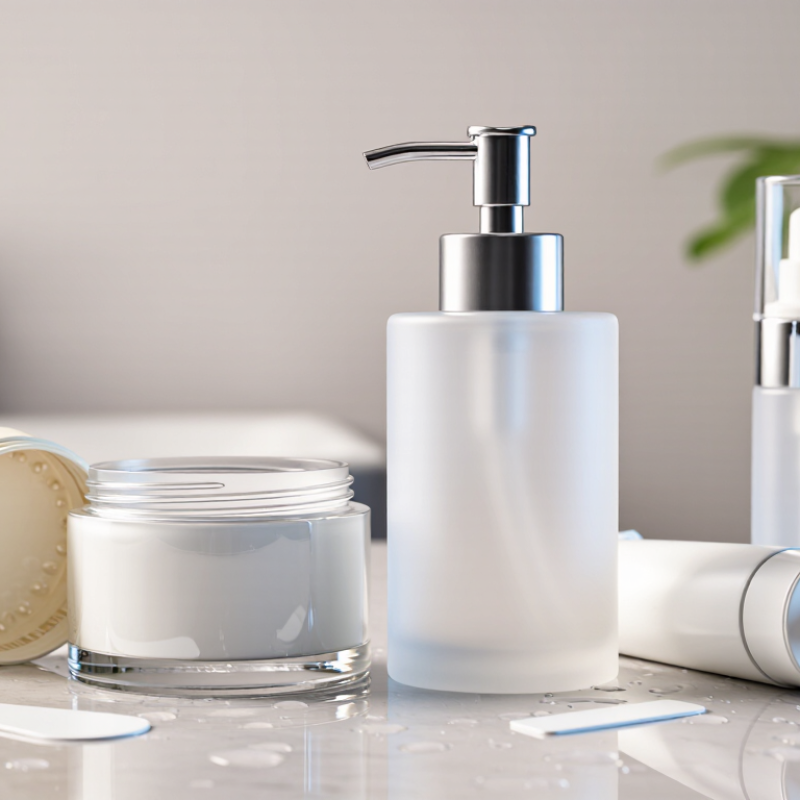
Start with the formula. A water-based lotion may need a different package from a thick balm or an oil-rich serum. Ingredients sensitive to air or light can lose stability faster when repeatedly exposed. An opaque, tightly sealed bottle may help limit exposure, but packaging alone cannot guarantee a product’s shelf life. Check compatibility through stability testing, including whether the formula changes color, scent, or texture after contact with the container.
Small details matter. A pump can reduce finger contact and dispense a consistent amount, while a jar may suit a dense cream that will not flow through a narrow opening. However, pumps can struggle with especially thick formulas, and jars invite repeated exposure during use. It is tempting to choose the most protective-looking option. Test how much product remains trapped inside, too.
Consider how long the product is expected to be used and where customers will keep it. A frequently used moisturizer may need convenient, controlled dispensing; a light-sensitive serum may benefit from an opaque container. Check that closures stay secure during transport and that the package materials tolerate the formula over time. A few weeks of testing may reveal problems a quick visual check misses. Even then, real storage habits vary, so avoid treating one test condition as the whole story.
Choose skincare packaging by matching the formula’s chemistry with the protection it needs. Water-rich lotions often work in PET or HDPE, but oils and fragrance components may interact with some plastics. Test the actual formula, not just a similar-looking sample. Glass is generally chemically stable and provides a strong barrier, yet it is heavy and can break during shipping. Amber glass also helps limit light exposure.
Airless pumps can reduce repeated contact with air, though their valves and seals still need compatibility testing. Aluminum tubes block light well, but the inner lining must suit the formula. Check for leaks, changes in color or scent, and shifts in pump dose after storage at different temperatures. Small details matter. A package that performs well on a bench may behave differently after months in a bathroom.
Material choice also has an environmental cost. The OECD’s Global Plastics Outlook (2022) estimates that packaging made up 40% of global plastic waste in 2019. UNEP’s Turning off the Tap (2023) reports that packaging uses about 36% of plastics produced. These figures make recyclability worth considering alongside product protection. Still, a recyclable pack is not automatically the best fit if it lets a sensitive formula degrade or leak. A little uncertainty remains until pack-and-formula testing confirms the choice.
A skincare container should match the formula before it matches the shelf. Lightweight lotions flow well from pump bottles, while thick balms often need wide-mouth jars or squeeze tubes. For formulas sensitive to air or light, consider an opaque bottle with a controlled pump. A jar is easy to use, but fingers can introduce moisture and residue. Small details matter.
Size should reflect how much people use and how long the formula remains suitable after opening. A large bottle may reduce packaging per milliliter, yet it can become inconvenient if users leave it half-finished. The Grand View Research report estimated the global cosmetic packaging market at $29.8 billion in 2023 and forecast 5.5% annual growth from 2024 to 2030. These are market estimates, not proof that one format works for every product. Test it cold. Check whether the package fits a bathroom shelf, travel bag, and intended use period.
The dispensing mechanism deserves hands-on testing. Pumps can deliver measured portions, but thick creams may clog or leave product trapped inside. Tubes are portable and help limit contact, though squeezing the final portion can be awkward. Compare the dose across repeated presses, then weigh the package before and after use to estimate leftover product. Not always. A mechanism that feels elegant in a sample may frustrate users when their hands are wet. Test with the actual formula, not water.
Compare representative package volumes when choosing a container size for skincare products.
These are representative nominal sizes, not market-share data. Smaller formats can suit concentrated products or sampling; larger formats can work for products used frequently. Match the container and dispenser to the formula—for example, jars for thicker creams and pumps for lotions—and check product compatibility before selecting packaging. Fluid-ounce conversions use 1 US fl oz = 29.5735 mL.
A skincare pack has to protect formulas, work in wet hands, and earn trust on a crowded shelf. Start with the product: a thick cream may need a wide-mouth jar, while a runny serum suits a controlled pump. Test the pack with damp fingers. A slippery glass bottle can look refined, yet it may be awkward beside a sink.
Sustainability claims need evidence. UNEP’s 2023 report, Turning off the Tap, says packaging uses about 36% of all plastics produced. That figure covers packaging broadly, not skincare alone. Choose materials that local collection systems actually accept, and check whether pumps, springs, and mixed-material caps complicate sorting. McKinsey’s 2023 packaging research found that 60–70% of surveyed consumers said they would pay more for sustainable packaging. Stated intent is not the same as buying behavior, though. A refill pouch may use less material, but pouring it neatly is not always easy.
Brand presentation comes from touch and detail, not decoration alone. A clear label, steady pump dose, and cap that closes securely can feel more convincing than a heavy box. Compare samples under bathroom lighting; pale text can disappear on frosted glass. Refill systems also need a simple, hygienic routine. I would not assume every “recyclable” pack gets recycled. Ask suppliers for material specifications and test packs with real users before committing.
Skincare packaging should protect the formula before it attracts attention. Check that each product-contact material is suitable for the formula, intended use, and storage conditions. Oils, acids, and water-based products can interact differently with plastics, coatings, or seals. Ask for material specifications and relevant safety documentation. Small details matter.
Test the filled package, not just an empty sample. Look for leaks, changes in color or odor, warped components, and dispensing problems after realistic storage. Safety requirements and labeling rules vary by market, so confirm them with qualified regulatory professionals before printing. Check that ingredients, directions, warnings, and other required details are accurate and easy to read. Leave enough space for legible text.
Supplier quality needs evidence. Request batch traceability, quality-control procedures, and test reports that match the materials being purchased. Compare the documents with the actual components; a polished sample proves little about later production. A neat checklist helps, but it cannot catch every edge case. Even careful testing may not reflect every bathroom shelf or shipping route, so record issues and reassess when the formula or packaging changes.
| Evaluation Area | What to Check | Useful Evidence or Reference | Practical Selection Criterion |
|---|---|---|---|
| Formula and material compatibility | Check whether the formula may cause swelling, cracking, discoloration, odor transfer, corrosion, leakage, or changes in dispensing. Pay particular attention to oils, solvents, acids, and high- or low-pH formulas. | Documented compatibility testing using the intended formula, packaging materials, closure, and production process. Test under relevant storage and transport conditions. | Choose a pack that shows no unacceptable physical or sensory changes and continues to protect and dispense the product throughout its intended shelf life. |
| Product protection and dispensing | Assess protection from light, air, moisture loss, and contamination, as relevant to the formula. Test the pump, dropper, tube, or jar for dose consistency, leakage, clogging, and ease of use. | Package performance, leak, dispensing, and stability test records. An airless format may help limit exposure, but its suitability must be verified with the specific formula. | Match the pack format to the product’s sensitivity, viscosity, use pattern, and required dose; do not assume a particular format is automatically more protective. |
| Material and component documentation | Identify the materials used in every product-contact component, including the container, liner, pump, valve, and seal. Request information on colorants, coatings, and recycled content where relevant. | Current component specifications, material declarations, safety data where applicable, and supplier statements covering the intended cosmetic use. | Use traceable, clearly specified components. Confirm that any recycled or alternative material performs safely and consistently in the finished pack. |
| Safety and quality testing | Confirm that the finished packaging is suitable for its intended use and that risks such as contamination, leakage, breakage, or component failure have been assessed. | Risk assessment and relevant test reports. ISO 22716 provides guidance on cosmetic good manufacturing practices; it is not a packaging-material safety certification. | Review the scope and date of each report, and verify that it covers the actual material, component, site, and product configuration being purchased. |
| Market-specific labeling | Check required product identity, ingredient declaration, net contents, responsible business details, warnings, and other information for every destination market. Requirements and placement rules differ by jurisdiction. | For the United States, review applicable FDA cosmetic labeling rules, including 21 CFR Parts 701 and 740, and MoCRA requirements. For the EU, review Regulation (EC) No 1223/2009, including its labeling provisions. | Approve artwork against current rules in each sales market before printing. Do not treat one region’s label as automatically compliant in another. |
| Supplier quality controls | Review incoming-material checks, production controls, defect handling, corrective actions, lot traceability, and procedures for notifying customers about changes. | Quality-system documents, audit findings, sample inspection records, change-control procedures, and batch or lot documentation. ISO 9001 certification may support a quality-system review but does not by itself prove packaging suitability. | Prefer suppliers that can demonstrate consistent controls, maintain traceable records, and obtain approval before changing materials, processes, or production sites. |
| Production samples and tolerances | Compare approved samples with production parts for dimensions, color, fit, decoration, closure torque, and dispensing performance. Define acceptable defect limits in advance. | Approved “golden sample,” component drawings, written specifications, inspection plans, and agreed acceptance criteria. | Use written specifications and inspect production samples before full-scale orders, especially after tooling, material, or process changes. |
| Sustainability and end-of-life claims | Check the actual material mix, separability of parts, local collection and recycling availability, and evidence for any environmental claim. | Material breakdown and claim substantiation. Recycling availability varies by location, format, color, size, and sorting infrastructure. | Make specific, supportable claims and assess the complete pack—not just the main container. Avoid implying that a package is recyclable everywhere unless verified. |
| Final approval before launch | Review the filled, closed, labeled pack as a complete system, including transport conditions and foreseeable consumer use. | Signed artwork approval, compatibility and performance results, supplier documentation, and a record of market-specific regulatory review. | Release the packaging only after the product owner has documented technical, quality, and labeling approval for the intended markets. |
Note: Regulatory requirements depend on the product, claims, and sales market. Confirm current local rules and obtain qualified regulatory advice where needed.
A watery lotion may need a pump, while a dense balm may work better in a wide-mouth jar. Check that the formula does not change color, scent, or texture after contacting the container.
An opaque, tightly sealed bottle can limit exposure for sensitive formulas. It cannot guarantee shelf life. Not always.
Pumps can dispense consistent amounts and reduce finger contact, but thick creams may clog them. Jars suit dense products, though each opening exposes the contents again.
Test the formula with its container over time, and check for changes in color, scent, and texture. Also see how much product a pump leaves behind. Small tests help.
Try it with damp fingers, especially near a sink. A glass bottle may look refined but feel slippery in wet hands.
Check whether local collection systems accept the materials. Pumps, springs, and mixed-material caps can make sorting harder. “Recyclable” does not always mean recycled.
A pouch may use less material, but pouring can be messy. Test whether the refill routine feels simple and hygienic.
Look for a clear label, a steady pump dose, and a cap that closes securely. Check pale text under bathroom lighting; frosted glass can make it hard to read. I would not judge from appearance alone.
Choosing the right skincare packaging starts with understanding the formula, expected shelf life, and how customers will use the product. Ingredients that are sensitive to air, light, or contamination may need stronger protective barriers, while creams, oils, and lightweight lotions can call for different materials and dispensing methods. Compare options such as glass, plastic, and other suitable materials for compatibility, durability, and product protection before selecting a container.
To decide what is the best packaging for skincare products, consider container type and size alongside ease of use, refill or recycling potential, and how the design communicates the product’s purpose. Pumps, jars, tubes, and droppers each offer distinct benefits, so match the mechanism to the formula and application. Finally, review applicable safety and labeling requirements, and assess suppliers for consistent quality. A thoughtful choice balances product integrity, customer convenience, sustainability, and clear presentation.

Ariqa Fashion