In 2026, how does packaging affect product shelf life? The answer often begins with what a package keeps out—or keeps in. Oxygen can dull a snack’s flavor. Moisture can soften a crisp biscuit, while light may damage sensitive ingredients. A sealed pouch, coated carton, or amber bottle can slow these changes, but each protects differently. Packaging educator Walter Soroka describes packaging as “the science, art, and technology of enclosing or protecting products for distribution, storage, sale, and use.” That protection starts on the shelf. It also matters during filling, shipping, and storage.
For a food maker, the right choice depends on the product, its filling process, and its expected storage conditions. A barrier film may help preserve aroma; a tight seal may limit air and moisture exchange. Small details matter. A pinhole can undo careful material selection. So can a warm warehouse or a poorly closed cap. Packaging is not magic. It cannot repair spoiled ingredients or replace sound handling. And a longer printed date alone does not prove better protection. Teams should test packaging with the actual product, then review results under realistic conditions. There is no single best material for every item. That part is easy to overlook. The useful question is not merely which package looks strongest, but which one reliably protects this product from the specific changes that shorten its life.
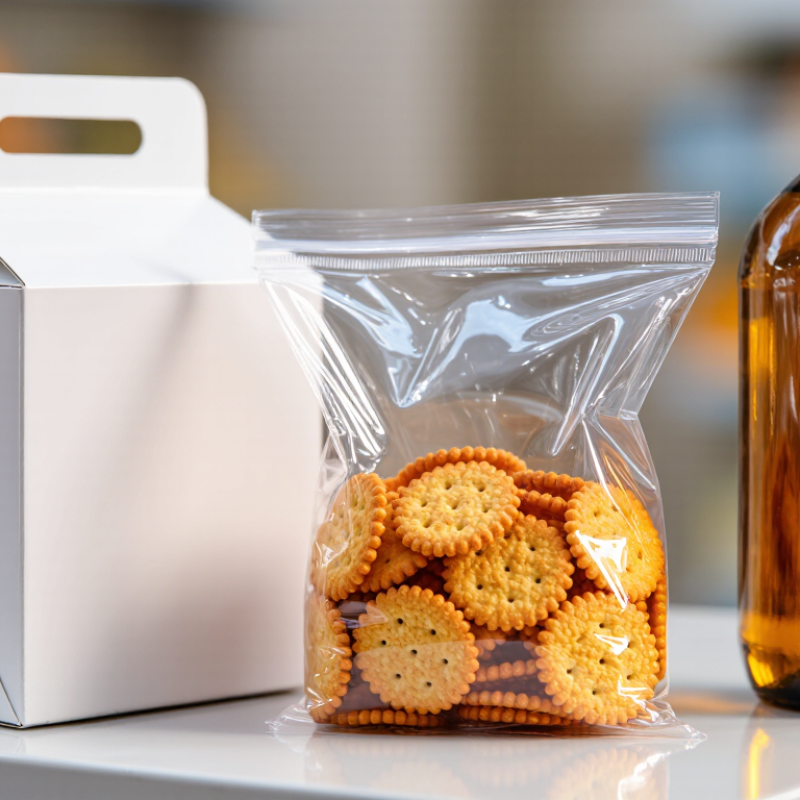
Packaging can slow product changes, but it cannot make every product safe indefinitely. To assess shelf life clearly, separate three measures: quality, safety, and date-life.
Quality describes traits people notice, such as crispness, aroma, color, and texture. A biscuit may soften when moisture passes through a weak seal. A clear pouch may also let light fade a product’s color.
Safety concerns whether the product remains safe under its stated storage conditions. The package helps by limiting exposure to oxygen, moisture, contaminants, or light, depending on its materials and seal. It does not replace hygienic production or temperature control.
Date-life is the validated period during which a product is expected to meet defined quality and safety targets. That period should come from product-specific testing, not packaging claims alone. Testing may include seal checks, sensory reviews, and suitable microbial or chemical analyses.
Conditions matter. A package tested at room temperature may perform differently in a warm delivery van. A printed date can look precise, yet still rest on limited assumptions. That deserves a second look.
Manufacturers should document storage conditions, test methods, and known uncertainties when setting a date-life measure.
Oxygen can quietly change a product long before its package looks damaged. It may fade color, weaken aromas, or make fats taste stale. For sensitive foods, high-barrier films often target an oxygen transmission rate below 1 cc/m²/day. This figure describes oxygen passing through a measured area of film over time, under specified test conditions. Numbers can mislead. Temperature, humidity, and testing methods can shift the reported result.
A low OTR film can slow oxygen exposure, but it cannot guarantee a particular shelf life. The seal matters too. A tiny wrinkle near a pouch corner may let in more oxygen than the film itself. So can a pinhole created during filling or handling. Packaging teams should assess the complete package, not just a film specification. They should also consider the product’s oxygen sensitivity, storage temperature, light exposure, and moisture needs. That matters. A barrier designed for dry snacks may not suit a moist product. In practice, testing filled packages under realistic storage conditions helps reveal weak points. The target is useful, but it is only one part of the shelf-life decision.
A package can look dry and still admit enough water vapor to soften crisp food or clump a powder. ASTM F1249 measures the water vapor transmission rate (WVTR) of a plastic film using a modulated infrared sensor. The test exposes the film to controlled humidity and temperature, then measures vapor passing through it. Results are commonly reported in grams per square meter per day. Always record the test conditions; a WVTR number without temperature and humidity is hard to compare fairly.
For example, a thin film may perform well in a cool, dry test but allow more moisture through in a warm, humid warehouse. Tiny defects matter. ASTM F1249 evaluates film, not a finished package with seals, folds, or closures. Those weak points may change real shelf life. Test representative material, condition samples as required, and use replicates to spot variation. Then consider the product’s moisture sensitivity and expected storage conditions. A low WVTR is not automatically better if it adds cost or complicates packaging. The uneasy part: laboratory results cannot capture every shipping and handling surprise. A practical shelf-life study can reveal gaps between the measured film and the package customers actually use.
Moisture Control: Measure WVTR Using ASTM F1249
Lower water vapor transmission rate (WVTR) means less moisture passes through the packaging, which can help protect moisture-sensitive products. The values shown are illustrative examples in g/m²/day at 38°C and 90% relative humidity—not measured test results or universal material specifications. ASTM F1249 is a test method; actual results depend on the material, thickness, and test conditions.
Temperature can quietly shorten a product’s usable life, even when its packaging remains intact. The Q10 rule of thumb estimates that many deterioration reactions run about twice as fast for every 10°C rise. If conditions stay consistent, a product with 20 days of shelf life at 20°C might last roughly 10 days at 30°C. That is an estimate, not a guarantee. Not always.
Actual results depend on the product and the type of change being measured. A warm storage period may speed oxidation, moisture migration, or microbial growth at different rates. Packaging can slow some changes: a strong moisture barrier may help keep crackers crisp, while an oxygen barrier can reduce oxidation. But packaging does not cancel heat exposure. A parked delivery vehicle or a warm storeroom can still matter.
For a practical assessment, record temperatures during storage and transport, then compare product quality at planned intervals. Look for changes such as softening, fading, off-odors, or altered texture. Test the actual product in its intended package; assumptions from another product may not transfer. The Q10 estimate helps flag risk, but it can oversimplify real temperature swings. I would treat it as a planning tool, then refine the shelf-life claim with product-specific testing.
A pouch may look sound while a weak seal quietly admits oxygen or moisture. Even a tiny leak can shorten shelf life by dulling aroma, softening crisp foods, or allowing a sterile barrier to fail. ASTM International’s F2096 test method reports detection capability for defects around 250 micrometers, with an 81% probability of detection under specified conditions. That figure is not a guarantee for every package, material, or operator. F2096 is designed to find gross leaks, not prove that a package is absolutely leak-free. Important distinction.
In practice, the test pressurizes a submerged package and looks for a steady stream of bubbles. A useful quality check controls water depth, internal pressure, and observation time, then records where bubbles emerge. Test representative samples after sealing and after handling or distribution simulation; the procedure is destructive, so it cannot certify every unit. The FDA’s 2004 guidance on sterile drug manufacturing also emphasizes container-closure integrity as part of maintaining product quality. A clean test result still has limits. It is easy to overread one. Pair F2096 with seal-strength checks and a validated shelf-life study, especially when film thickness or sealing conditions change. Test conditions matter as much as the bubble.
| Data dimension | ASTM F2096 method information | What to record or evaluate | Relevance to product shelf life |
|---|---|---|---|
| Standard and purpose | ASTM F2096 is a bubble-emission test method for detecting gross leaks in packaging by internal pressurization. | Record the standard used, package type, test date, and approved test procedure. | A gross leak can compromise the package barrier and reduce the protection intended to support shelf life. |
| Detection principle | The package is internally pressurized while immersed in a liquid; gas escaping through a leak appears as bubbles. | Record the observed bubble location and whether bubbling is continuous or repeatable after initial surface air has cleared. | A leak path may allow air, moisture, or contaminants to enter, depending on the package and storage conditions. |
| Package suitability | The method is intended for packages that can be internally pressurized and inspected for escaping bubbles while submerged. | Document package construction, dimensions, test access point, and any features that could obscure bubble observation. | Package geometry and material can affect test visibility and the performance of the barrier system. |
| Test pressure and setup | Pressure and other operating conditions must be selected for the package and controlled by the test procedure; there is no single setting that applies to every package. | Record the applied pressure, pressure-control method, immersion conditions, and any deviations from the approved procedure. | Consistent test conditions help make comparisons meaningful when evaluating packaging changes or production lots. |
| Detection capability | Detection capability depends on factors such as package design, test conditions, leak location, and observation. A universal leak-size limit should not be assumed. | Document the validated capability for the specific package and procedure; note any limitations affecting inspection. | Passing this gross-leak test does not prove that a package has no smaller leaks or will maintain its barrier for a particular duration. |
| Result and disposition | Interpret observations according to the written procedure and acceptance criteria established for the package. | Record the pass/fail result, sample identification, suspected leak location, operator, and follow-up action. | Failure investigation can identify sealing or package defects that may undermine expected product protection. |
| Test limitation | Access for internal pressurization generally requires making an opening in the test specimen, so the tested package is not suitable for subsequent product use. | Identify specimens as destructive-test samples and keep them separate from saleable product. | Use representative samples and a defined sampling plan; do not treat a destructive test as inspection of every finished unit. |
| Shelf-life validation | ASTM F2096 evaluates gross-leak integrity; it does not directly establish product shelf life or replace product-specific stability studies. | Pair package-integrity results with appropriate aging, storage, and product-quality evaluations when substantiating a shelf-life claim. | Shelf life depends on the product, package barrier, sealing process, distribution, and storage conditions—not on a single leak test alone. |
Note: Apply the current ASTM F2096 edition and a package-specific, validated procedure. Test results should be interpreted alongside the product’s shelf-life and packaging validation evidence.
It describes how much oxygen passes through a square meter of film daily under stated test conditions. Lower rates can help protect sensitive foods. Conditions matter.
No. A pinhole or wrinkled pouch seal can admit oxygen. Test the filled package, not only the film.
ASTM F1249 measures water vapor passing through plastic film. Results are usually reported in grams per square meter per day. Record temperature and humidity, too.
A film tested in cool, dry conditions may behave differently in a warm, humid warehouse. Seals and folds also create weak points.
It suggests many deterioration reactions run about twice as fast when temperature rises by 10°C. A rough guide.
A product lasting 20 days at 20°C might last about 10 days at 30°C. Actual results vary by product and change measured.
Test the actual product in its intended package. Track temperatures and inspect for fading, softening, off-odors, or texture changes. I would not trust one neat lab number alone.
How does packaging affect product shelf life? It helps preserve quality, support safety, and maintain a product’s expected date-life by controlling the conditions inside and around the package. Shelf life is not determined by packaging alone; it also depends on the product, its processing, and storage conditions. A suitable package can slow changes such as oxidation, moisture loss or gain, and other forms of deterioration.
Oxygen barriers are important for products sensitive to oxidation, and high-barrier films may be designed to achieve an oxygen transmission rate below 1 cc/m²/day. Moisture protection can be assessed by measuring water vapor transmission rate (WVTR) using ASTM F1249. Temperature also matters: as a general Q10 rule of thumb, many deterioration rates may roughly double for each 10°C increase, though actual results vary. Finally, sound seals help maintain the intended barrier performance; ASTM F2096 can be used to detect gross package leaks. Together, these measures help guide packaging choices and shelf-life testing.

Ariqa Fashion